

Ghana’s national scandal and headlines centre Obuasi, a headteacher, sexual assault and rape allegations by 19 victims – and a brotherhood of bystanders whose actions protect the alleged predator and betray a nation.
Harsh words? Maybe. But this Obuasi horror is a mirror to the world of education for too many children throughout Ghana. And it connects to a global crisis when it comes to violence and silence.
OBUASI ISN’T NEW
Obuasi isn’t new, and it isn’t news. It could become a crossroads for changed policy, systemic reckoning and moving beyond outrage to transformative action.
I say it’s not new because I was part of the Coalition Against Sexual Assault (CASA) in Ghana years ago that engaged with these issues. During my time there I created the #TimesUpGh campaign after learning about the sheer numbers of girlchildren battling with levels and versions of sexual harassment, assault and rape in too many of Ghana’s schools across our 16 regions.
During that campaign, a call came to the studio where I was a guest on a tv show. It was a male teacher asking us to come to his school due to sexual assault allegations against the headteacher. The school was in the Volta region. Me and my colleague, Eliza Olympio of CASA went.
We arrived, sat under a tree and for several hours listened to allegation after allegation of sexual harassment and assault against the Headteacher of the school. As with the Obuasi case, the allegations had been reported, there was knowledge about the alleged assaults.
Do we see the pattern? An alleged assault occurs. A girl reports it. No action is taken. Another assault happens, that is reported. No action is taken. Another assault happens, the threats and silencing begin. No action is taken against the alleged perpetrators. Measures are taken to silence the alleged victims. And so, the cycle continues.
And then the interference begins. Those who stay silent about the alleged assaults, the damage to the girls’ bodies, education, futures. Those who have nothing to offer to support the healing of the trauma these girls face. Those who stay silent on assault but become vocal in their support of the alleged predator.
I’m talking about the brotherhood of bystanders. Those who stand by, know, hear but don’t act in support of the harmed person. Those who learn what happened and reach for all manner of justification to call it anything than what it is. Those who say, ‘I would never do such a thing’, but likely know men who have done exactly such a thing, but they chose silence.
THE CULTURAL NON-DISCLOSURE AGREEMENT
What is the price of this kind of silence?
The Ghanaian journalist and public health expert Efam Dovi says: ‘Your silence has implications.’
Indeed, it does. I call the silence around perpetrators part of the cultural non-disclosure agreement. In the world of law, there is a document called an NDA – a non-disclosure agreement which identifies what an alleged victim will receive, in exchange for her silence on what she alleged occurred. That’s a legal document. In Ghana, we have the cultural NDA. What I mean by that is the weight of the law is not as heavy, powerful and effective as the weight of cultural pressure. The law may represent formal protection, the culture is the landscape of lived power.
The cultural pressure is also a cycle. It looks like this. The alleged sexual assault occurs. Someone is told about it. If it reaches the family, the authorities and legal action of some kind – something that is rare given how few cases even get to the authorities – the cultural pressure begins. It takes different forms.
It is about being silent, being silenced, or choosing silence. Each is different and means different things.
Here’s how it breaks down.
Being silent is saying nothing when you learn what happened – it is at that point men join the brotherhood of bystanders.
Being silenced is when someone may use threats or bribes to buy your silence. This could be because of a power dynamic – the person holds power or authority over you and may somehow jeopardise some element of your life.
Choosing silence is when men know who did it, what they did, to whom they did it and decide the price of belonging in this brotherhood is their silence. That price may be connected to sustaining that belonging, or retaining access to power, or reflective of what masculinity taught them – ‘bro code’, ‘boys boys’, ‘stand with your guys’. Always.
In Ghana, the most recent headlines emerging regarding Obuasi focus on a Chief’s alleged interference, alongside members of the alleged perpetrator’s family. They are approaching family members of the alleged victims and using pressure and money to push girls to withdraw their accusations. Two cases have been withdrawn.
On Friday, October 23rd, I was on air with Ghana’s Gender Minister on JoyNews, the premier television and news channel of The Multimedia Group, Ghana’s largest independent media platform. We both spoke about systemic challenges, and the need for systemic change.
To be clear, this is not unique to any political party, this is particular to Ghana’s culture of systemic protection of predators and national failure of alleged victims. And that is connected to a global culture of systemic protection of those who assault, a failure to center the harm caused to the victims, whose futures are too often threatened or destroyed, creating a legacy of untreated trauma that lingers.
POLITICAL POWER & THE PRICE OF SILENCE
The Obuasi headteacher has political connections and aspirations. He was seeking chairmanship of the regional political party. This is an additional revelation. Political power is now stained with multiple sexual assault allegations. Political ambition and prospects aren’t necessarily marred, halted or scarred by such allegations. The path may remain open through protection by this brotherhood of bystanders. Their silence may cost girls their education, but not his ambition or prospects. Where else do we see this? In countries across continents political leaders hold power and elected office cheek by jowl with felony convictions and sexual violence allegations. So-called democracy lies in these hands, and those of the brotherhood of bystanders.
The harm doesn’t start and end with the act of sexual violence. The Brotherhood of Bystanders contribute significantly to sustaining and expanding the violence which then takes different forms but continues to scar the victim, and shape their future.
We are in a time when the brotherhood of bystanders has become a threat to safety, democracy, governance and education. It requires a reckoning. It must be named, understood, engaged, explored and transformed.
THE BEAUTY & BURDEN OF BROTHERHOOD
Ghana is not alone in this approach or tactic. From Ghana to the US and the Cornell 7.
In the US, Cornell University has been making global headlines after allegations of a 10-hour rape against a student who had been drugged with ketamine at a fraternity party. There were the 7 who are accused of committing the rape. There were the Cornell administrators and authorities who are accused of treating gang rape like a slap on the wrist after reports of students being given essays as ‘punishment’. And there were the 54 men who allegedly saw the message that the rape was occurring posted in their fraternity WhatsApp group, and did nothing.
What connects Obuasi and Cornell is that both center the world of education, privileging those who cause harm over those who are harmed, drawing on the corridors of power to shield the alleged harm-doers from full consequences, and reminding us that geography is no indicator of how silence, power, and protection of alleged harm-doers travel, linger, devastate and then simply keep going.
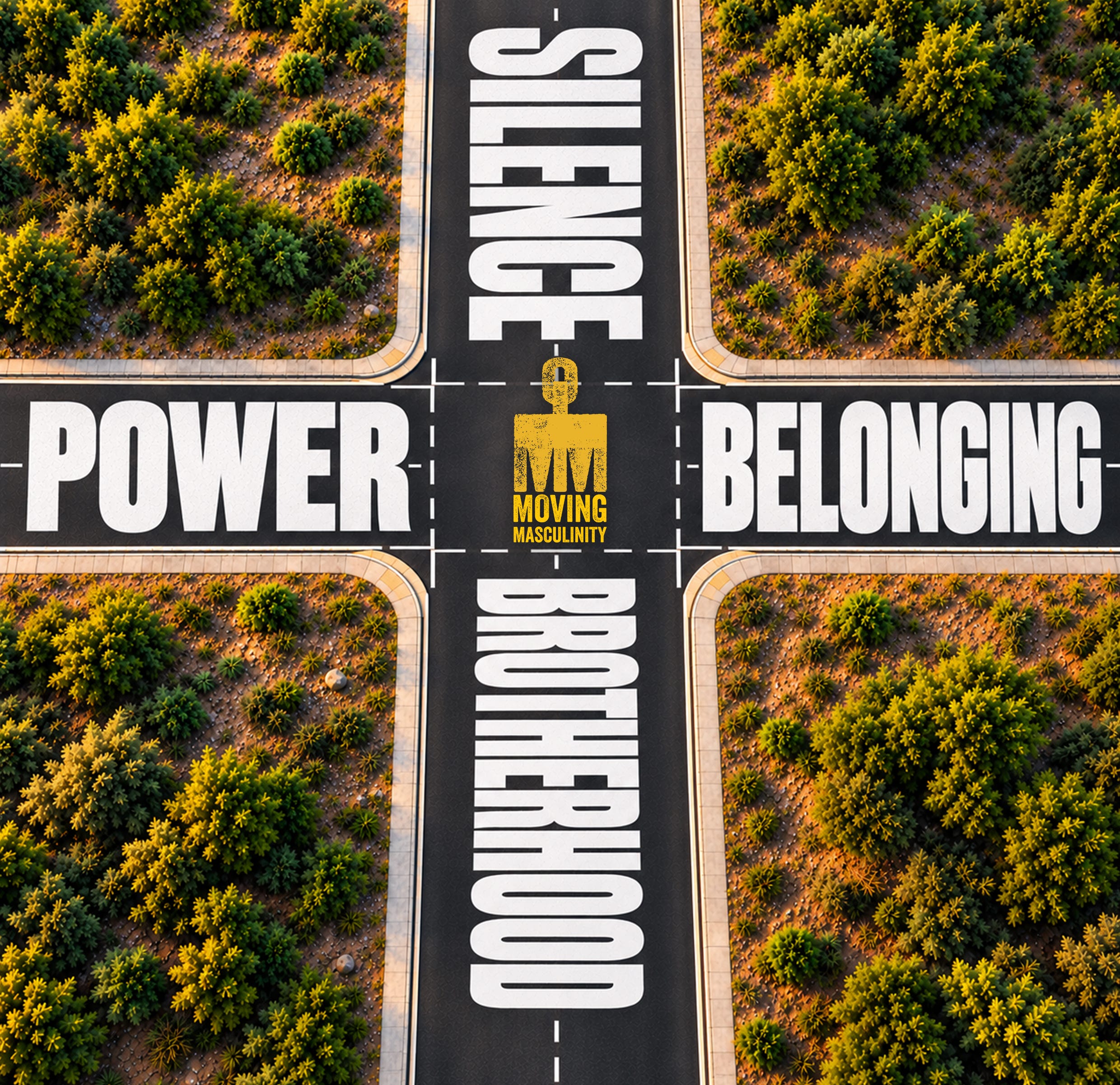
This formula of belonging, silence, brotherhood and power is mirrored and manifests across sectors globally: from the worlds of church to entertainment to tech to fashion, this formula exists, is entrenched and endures. It’s a global culture with different names but similar factors.
My focus is the bystanders. The brotherhood of bystanders. Those who stand by, see, hear, learn about what happened, and hold their silence, carry that silence and continue that silence. That is a particular harm we do not address or reckon with.
Fraternity culture is a container for the beauty and burden of brotherhood. That burden is the price of belonging too often paid by silence.
WHO IS TALKING WITH THE MEN?
After leaving the Volta where the schoolgirls shared their allegations of assault against the headteacher, and continuing the #TimesUpGh campaign which captured the attention of the media, the National Teaching Council and the then Minister of Education, I remember the words of a 15-year-old Ghanaian schoolgirl.
She asked me: Why isn’t anyone talking to the men? Who is talking with the men?
It was her words that led me to start doing work on masculinity in Ghana, work I had already been doing globally. In Ghana, I created a series of projects on power, consent, violence and leadership. There were a series of dialogues, video, visuals exploring and engaging Ghanaian men to name and explore what they learned about power and from whom, where they learned about consent and from whom, and what kind of violence had they witnessed by the men in their community, and what action had other men taken.
The projects were led by Theresa Adezewa Ayittey, a young Ghanaian woman, now leading in this space of masculinity in Africa who shared how much she learned hearing from men on these issues.
She shared about the Ghanaian professor whose work on gender violence was partly due to his witnessing two sexual assaults of a girl where he was a bystander who didn’t act. She shared about the men across Accra and Tamale whom she interviewed regarding witnessing violence and how that affected them, and their views on women. These projects were instructive and revealing. They affirmed this brotherhood of bystanders as a force sustaining violence against women. There was the perpetrator of the violence, and all those who knew and chose silence.
THE PRICE OF BELONGING
These projects, alongside those on masculinity in the US and South Africa, shaped what became MOVING MASCULINITY, a 10-year initiative comprising digital village and global lab. It is building emotional infrastructure within masculinity as leadership development, public health, civics and healing. Emotional infrastructure is defined through three interconnected elements: emotional literacy, emotional inheritance, emotional accountability. Silence must become a subject and focus of emotional accountability.
Brotherhood of Bystanders is about an emotional reckoning where men name and interrogate their relationship to silence, brotherhood, belonging and power. Reckoning with the beauty, burden and cost of this brotherhood requires emotional work.
So many men who see themselves, describe themselves and are considered ‘good men’ may actually be part of this brotherhood of bystanders.
This brotherhood of bystanders need not keep choosing silence. Their hands can be untied. They can be untied by choosing to do this emotional work where we reckon with a relationship to power at the intersection of silence, belonging and brotherhood. The question isn’t capacity, it’s willingness. Will a brotherhood of bystanders become a circle of the willing - committing to emotional accountability, doing their emotional work, and reckoning with power, the price of belonging & ultimately strengthening democracy?
2027. Brotherhood of Bystanders, a MOVING MASCULINITY project from the global lab, begins.
Let’s do this emotional work.
**************************************