Moving Masculinity is an invitation. I ask what becomes possible when men are given permission to feel, to connect, and to move beyond what they have been taught, toward what they truly need.
CONCEPTUAL INTENT
My journey into photography started with a quiet struggle inside my own home. Where I come from, work is something you can see, touch, and count. A good job is one with clear hours, strong hands, and steady pay. Jobs like driver, mason, electrician—work that builds, fixes, or carries. In many families like mine, making art, like taking pictures, is often seen as something shaky. People wonder, “How does this put food on the table? How does it build a house?” It doesn’t fit easily into our understanding of real man’s work—work that requires sweat, endurance, and brings direct reward.
No one in my house shouted or fought me over it. The resistance was quieter: a doubtful look, a careful question, a heavy silence. They weren’t asking, “Why do you like this?” They were asking, “How will this help you live?” In a world where a man is measured by what he can provide and what he can bear, photography seemed like a distraction. Choosing it meant I was still their son, but I was stepping into a kind of work they couldn’t fully recognize.
Taking the pictures for Moving Masculinity, something changes. The camera becomes my cover and my key. It lets me look deeply without having to explain. I can pause on a way of standing, a look that turns away, a space between two people. I can take the unspoken feelings we all know and turn them into something you can see, a tight shoulder, a distant gaze, a patient slump. Through the lens, just paying close attention becomes its own kind of work.
For me, the process is as important as the images themselves.
PERSONAL CONTEXT & EARLY INFLUENCES
The way I take my pictures is part of this story. I started with an old manual camera, a Canon AE-1. To use it, I had to learn patience, care, and precision. That discipline - learning a skill through steady practice - feels familiar. It is how manhood itself is often taught: through repetition, attention, and control.
Later, when I moved to digital cameras, the technical part became easier. This freed me to focus on the human part: to truly see the person in front of me, to notice the small things - how they stand, the look in their eyes, a moment of quiet strength or softness. My camera became a tool for connection, for capturing the fluid and real experience of being a man.
The work continues after the picture is taken.
In the editing process, I sit with the images. I bring forward the quiet details: the light on skin, the texture of cloth, a subtle gesture that tells more than words. This is where the feeling of the moment is shaped into a story you can feel.
NEGOTIATING TRADITION & ARTISTIC CHOICE
In my family, we keep things inside as a way of taking care of each other. We stay quiet to keep the peace. We bear things patiently to show our strength. We hold ourselves tight to avoid shame or making small problems big.
Trouble in our house doesn’t start with shouting. It starts with small things we don’t say - a look, a sigh, something left unsaid. Because we don’t have the space to just speak our minds plainly, these small hurts pile up like firewood. Then one day, a small match strikes, and everything catches fire at once. Everyone talks over each other, not to listen, but just to be heard. It’s not about fixing anything anymore; it’s just to let the pressure out. And in that fire, all the tools we use to keep peace - the silence, the patience, the self-control - they all burn away.
When the noise dies down, nothing is really settled. Hearts are sore, feelings are still heavy, but we all just decide to move on as if nothing happened. We go back to everyday life - cooking, talking, working - without fixing what broke. That “moving on” is how we survive. It’s how we keep the family going, even with cracks in the foundation. We learn from young how to carry on, to endure without talking about the pain.
This is my upbringing. This is why I see the world the way I do, and why I take pictures the way I do. The moments I capture - when someone looks away, when arms are folded, when people stand close but not too close, when they bear a burden quietly - these are not just nice poses. They are the footprints of a way of life I know deeply. They show a family and a people who survive by hiding what is soft, by swallowing trouble instead of speaking it, and by trusting the flow of everyday life more than the trouble of confrontation. My photographs are not to blame anyone. They are just to show the quiet, unspoken rules that hold our relationships - and our lives - together.
PROCESS & METHODS
Masculinity is not a solid thing inside you. It is more like a skill you pick up over time, by watching and copying. You learn it in your family, in your community, just by seeing how life is done.
You don’t learn it first from books or big speeches. You learn it with your body, by watching how the men around you move, sit, and stand. You learn from how they talk or don’t talk, when they are angry or hurt. You learn from how they work, how they provide, how they hold their pain quietly. You see what makes people nod in respect and what makes them shake their head in shame. Slowly, these lessons sink into your bones. They become your own posture, your own way of holding your face, your own way of carrying yourself in the world. Your body remembers all the teaching.
To call it embodied is to say masculinity lives in your actions and feelings. It’s in how you tighten your jaw to stay quiet, how you lower your voice to seem calm, how you swallow your emotion to keep the peace. You practice these things again and again until they feel like you. But they can also change depending on where you are. The masculinity you show at home with your wife and children might be different from what you show at a meeting with elders, or when you’re with your friends. Each place has its own rules for survival.
OBSERVING MASCULINITY IN MOTION
Seeing masculinity as something learned also means it is not one straight path. It can be full of twists. The same strength that protects your family can also build a wall between you. The same silence that keeps peace can also bury a problem. Because it is something you practice, and not a stone inside your chest, it means you can look at it closely. You can ask questions about it. You can see it for what it is: a collection of habits passed down through time, shaped by our history and our need to survive. These habits live deeply in the body, even while we are looking at them with our own eyes.
As a photographer, I am drawn to moments where masculinity is not being asserted, but felt. I pay close attention to posture, gesture, stillness, and the spaces between men - those subtle intervals where care, hesitation, vulnerability, and trust quietly surface.
Many of the behaviors I photograph - emotional restraint, silence, endurance, and control - are survival responses passed down through families and communities.
THEMES & MESSAGES
As an artist and photographer, I watch how our customs guide us, and how some of the same customs quietly limit us. I ask the difficult questions we often avoid, and name the things we learn to live with in silence. Sometimes, a community survives by telling itself gentle stories, but when those stories harden into lies, they begin to weaken us.
Community is not simply my subject - it is my method, my witness, and a central source of meaning. Community is not softness or ease; it is duty. It is the thin thread that binds one person’s life to another’s. To say you belong is to accept responsibility for how others live, struggle, and endure. What we inherit - memory, habit, pain, and pride, does not stay in the past. It shapes how we relate today, how we speak, how we withhold, how we care. When a people refuse to face what has been carried forward unresolved, they lose the moral ground to act rightly in the present.
In this sense, the artist is in service to the community by insisting on truth, even when that truth unsettles. Like love, art asks for openness and courage. It requires confrontation, not accusation. I do not speak for the people, but stand among them as a witness, refusing the comfort of shared denial.
Community itself is also a witness. It remembers. It holds contradiction, continuity, and quiet negotiations that never make it into official records. In everyday gestures, silences, and rituals, it observes itself - absorbing what is said and what is avoided.
This story is ours to tell. It is important that we are the ones to tell it, with our own hands and our own eyes, so the truth of our experience is held with the care and understanding it deserves.
ARTIST IDENTITY & PERSPECTIVE
This work is my way of dealing with what I was given. The focus, the patience, the discipline I need for photography… I learned these things at home. They taught me to endure, to be steady. Now, I use those same tools not just to endure, but to look back and to question.
When I photograph - how they hold themselves, how they move - I am not throwing away my upbringing. I am using the very things it taught me: the silence, the strength, the control. I am using them as materials to look at how masculinity is taught, worn, and carried on the body.
I am a storyteller and a witness. I see myself as a keeper of our stories. My mission is to preserve the narrative of the world I come from, its strength, its silence, its complex beauty.
My work grows from a place of reflection and empathy.
My tool is the camera, but my aim is not just to take a picture. It is to search for the deeper truths about who we are, how we live together, and what it means to be human.My eye is drawn to the quiet, in-between spaces - the places where feelings and unspoken tensions reside.
For me, photography is both a personal journey and a conversation. It is a way to talk with the people and the culture I come from. It is my method to ask gentle questions, to reveal hidden layers, and to pay respect to the real, lived experiences that shape all of us.
The camera is not a wall between me and my past. It is a bridge. It holds together my family’s idea of a useful life and my own need to speak without words. It lets me stay in touch with where I come from, while finding my own way to show what that world feels like. What was once called a hobby has become my way of seeing, remembering, and making sense of it all.
WHAT I SEE
When I look at these photographs, I see quiet strength. I see moments of softness. I see the silent negotiation inside a man’s heart. I see in a person’s posture, in their eyes, a story of holding on and letting go - the pull between the old ways and the new path, between what is expected and what is truly felt. I see myself.
Each picture holds a fragment of life: the patience to endure, the discipline to control, the quiet need to connect. This is the real, daily experience of masculinity in the world I know.
My goal is not to give you one answer or a single definition of what a man is. My goal is to show you that it moves. It is lived in the body. It can be strong and gentle in the same breath.
I want these images to create a space for you to think, to feel, and to talk. I want these imagesto help you look past the stereotype and see the complicated truth of a person’s story - the full range of feelings that guide how a man walks through his life.
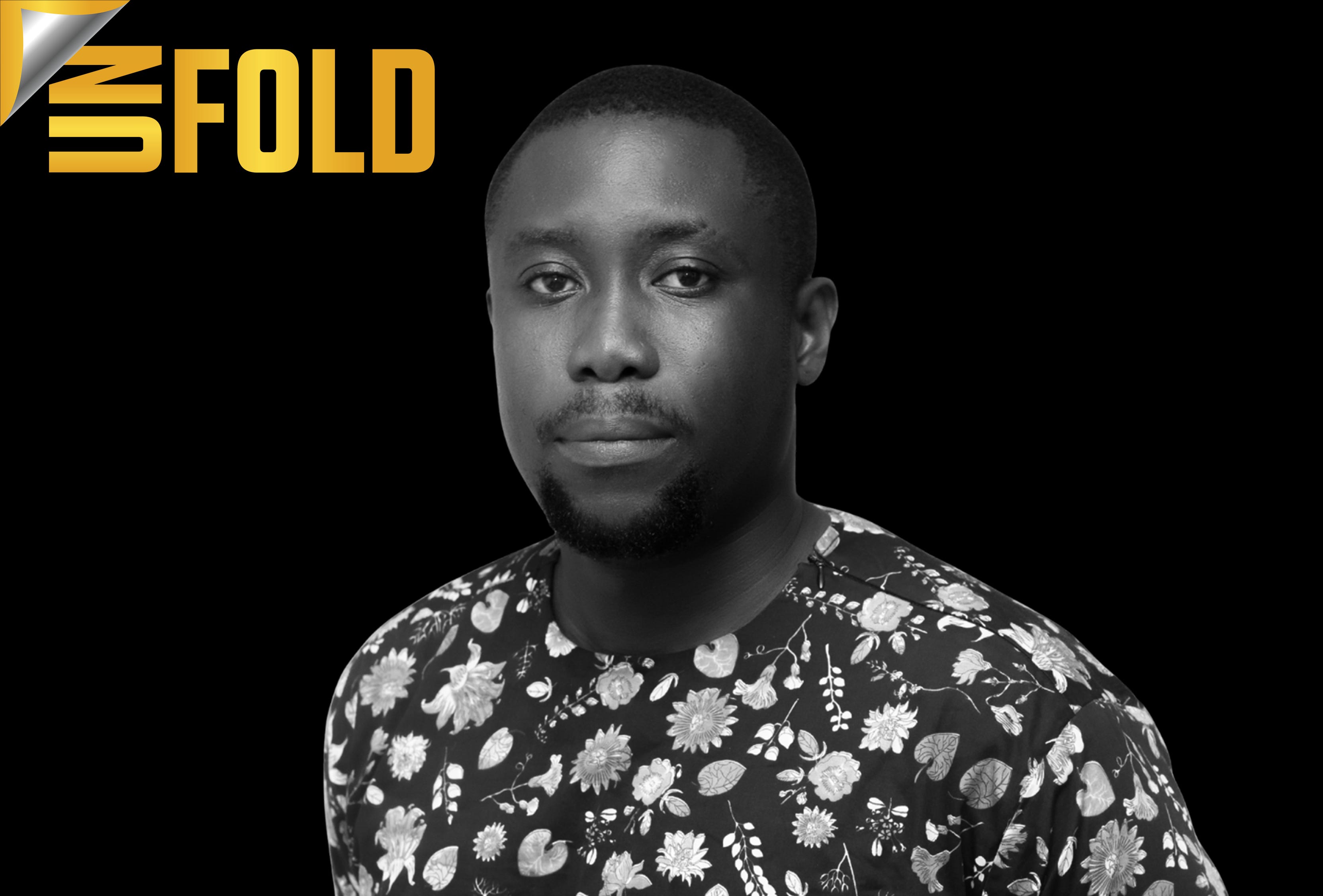
ABOUT ALEX KWESI AFARI
Alex Kwesi Afari is a Ghanaian photographer whose images are the visual spine of MOVING MASCULINITY: the Emotional Justice Digital Village, founded by Esther A. Armah. His images have been the visual soundtrack for Emotional Justice in Ghana for almost a decade, and are featured on multiple projects including: #IamUNLEARNING, Black Is, The L Word.